Every vehicle on the road has its own story — and at Boucher Nissan Waukesha, we think every driver in Waukesha, WI should know how to read it. That story is packed into 17 characters stamped into your dashboard: your Vehicle Identification Number, or VIN. It might look like a random string of letters and numbers, but it’s actually one of the most useful things on your car. Ever wonder “How are VIN numbers assigned?” — or what yours is actually telling you? Let’s break it all down.
VIN stands for Vehicle Identification Number. It’s a standardized 17-character code — made up of capital letters and numbers — that’s been required on every passenger vehicle sold in the U.S. since 1981. Think of it as your car’s fingerprint: unique to that specific vehicle, and packed with details about where and how it was built.
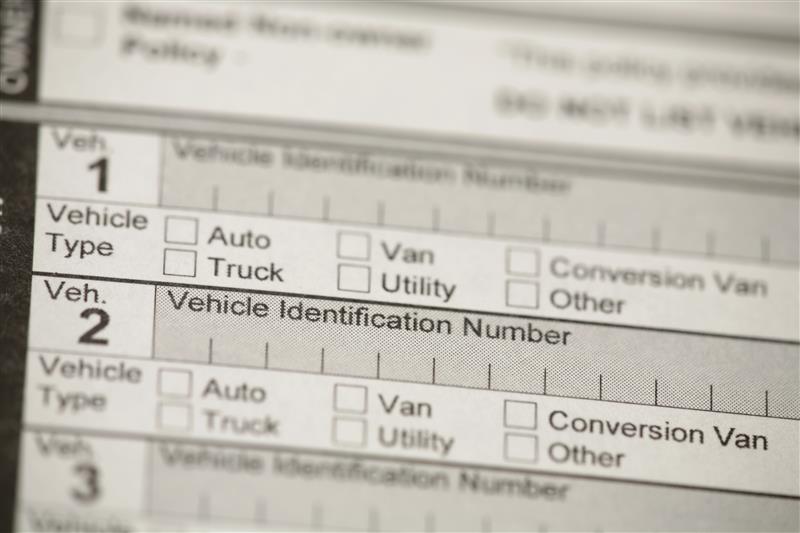
Before 1981, automakers used their own formats, which made cross-referencing vehicles a nightmare. The National Highway Traffic Safety Administration (NHTSA) stepped in and standardized the format we use today. Now, no matter where a car was made or sold, the structure of its VIN follows the same rules. The 17-character sequence excludes the letters I, O, Q, U, and Z to avoid confusion with the numbers 1, 0, and 2. Each section of the code tells a different part of the vehicle’s story — from the country it was assembled in to the specific order it rolled off the production line. Understanding the basics of a VIN digit year code and other positional characters gives you a real advantage when buying, selling, or servicing a vehicle.
A few things your VIN can tell you:
Not a single character in a VIN is wasted. Here’s what each position tells you — and why it matters.
The 1st character identifies the country of assembly. If a VIN starts with 1, 4, or 5, the car was built in the United States. A VIN starting with W means it was assembled in Germany. And if a VIN starts with Y, that vehicle came from Sweden or Finland.
The 2nd character identifies the manufacturer. For Nissan vehicles, that’s the letter N.
The 3rd character identifies the vehicle type — whether it’s a passenger car, SUV, or truck.
Characters 4 through 8 make up the Vehicle Descriptor Section (VDS). This section covers the specifics: body style, engine type, series, and model. It’s where you’ll find much of the detail mechanics and parts departments care about.
The 9th character is the check digit — a mathematical safeguard. It’s calculated using an algorithm that multiplies each character by a weighted value, sums the results, and divides by 11. The remainder is the check digit (if the remainder is 10, the letter X is used). This character exists specifically to catch fraud and counterfeit VINs.
The 10th character answers one of the most common questions: “Which VIN number is the year?” It’s always in position 10. This single character represents the model year in a 30-year rotating cycle using 21 letters and the numbers 1–9. For example, VIN year B means 1981 or 2011, and VIN year G means 1986 or 2016.
The 11th character is the plant code — the specific factory where the vehicle was assembled. For Nissans, N = Canton, Mississippi; W = Smyrna, Tennessee; and M = Aguascalientes, Mexico, among others.
Finally, characters 12 through 17 are the production sequence number — your vehicle’s serial number off the line, unique to that exact unit.
Here’s a quick-reference breakdown of all 17 positions:
| Position | What It Tells You | Example |
|---|---|---|
| 1st character | Country of assembly | 1, 4, or 5 = USA; W = Germany; Y = Sweden/Finland |
| 2nd character | Manufacturer (brand) | N = Nissan; F = Ford; G = GM |
| 3rd character | Vehicle type | Passenger car, truck, SUV |
| 4th–8th characters | Vehicle Descriptor Section (VDS) | Body style, engine, series, model |
| 9th character | Check digit (fraud prevention) | Calculated via algorithm; verifies VIN is legitimate |
| 10th character | Model year | B = 1981/2011; G = 1986/2016 — repeats every 30 years |
| 11th character | Assembly plant | N = Canton, MS; W = Smyrna, TN (for Nissan) |
| 12th–17th characters | Production sequence number | The vehicle’s unique serial number off the line |

There are a few reliable spots to find it — and it only takes a few seconds to locate.
The most common location is the driver’s side dashboard, right where it meets the base of the windshield. Step outside and look through the glass — you’ll usually see a small plate or a stamped label. The characters are small, so pulling up your phone’s camera to zoom in makes it easier to read.
It’s also printed on the driver’s-side doorjamb — open the door and look for a sticker or metal plate along the doorframe. Beyond the physical vehicle, you can find your VIN on your title, registration, insurance card, and on many finance or lease documents.
Quick locations to check:
It’s not just bureaucratic trivia — your VIN is genuinely useful in everyday situations.
If you’re shopping for a used vehicle, running a VIN check (through CARFAX or the NHTSA) can reveal accident history, odometer rollbacks, flood damage, and open recalls. It’s one of the best ways to protect yourself from buying a car with a hidden past.
When you bring your vehicle in for service, technicians use the VIN to pull up your exact build specs — making sure the right parts and fluids are used for your specific model and engine. Understanding “What digit in the VIN is year?” also helps confirm you’re getting parts designed for your exact model year, not a close-but-not-quite match.
Beyond service, your VIN is required for:
Your VIN isn’t just a string of random characters — it’s a complete identity document for your vehicle. From the country it was assembled in, to the exact model year, to its unique spot on the production line, those 17 characters tell the whole story. Understanding “How are VINs assigned?” and what each position means puts you in a better position, whether you’re buying, selling, insuring, or just staying on top of maintenance. At Boucher Nissan Waukesha, we’re always here to help Waukesha drivers make sense of the details — big or small.

Have questions about a vehicle’s VIN, history, or specs? The team at Boucher Nissan Waukesha is an easy stop — whether you’re browsing new Nissan inventory, researching a used vehicle, or scheduling service. Stop by, give us a call, or reach out online. We’re happy to help.
A VIN reveals where a vehicle was assembled, who manufactured it, its model year, engine and body style, and its unique production sequence number. It’s also used for recall checks, vehicle history reports, and parts lookups.
The 10th character always represents the model year. It uses a rotating 30-year code — for example, B = 1981 or 2011, and G = 1986 or 2016.
A VIN starting with W means the vehicle was assembled in Germany. A VIN that starts with Y was assembled in Sweden or Finland. The first character always identifies the country of origin.
No — the VIN stays with the vehicle permanently. However, a rebuilt or salvaged title will be reflected in a vehicle history report when you run a VIN check, which is exactly why checking the history before buying used is so important.
Those letters are excluded to prevent confusion with the numbers 1, 0, and 2. Leaving them out keeps VIN reading accurate, whether a person or a scanner does it.